
Introduction
Welcome to “What is Nifty,” your go-to guide for understanding one of the most pivotal components of the Indian financial market. Whether you’re a seasoned investor or just starting your career in the world of trading, Nifty plays a significant role in shaping your investment decisions.
Have you ever wondered what drives the Indian stock market? The answer might lie in a nifty little index called Nifty 50.
For young professionals and aspiring investors, understanding Nifty is crucial. It’s a benchmark that reflects the overall health of the Indian stock market, making it a great place to start your investment journey.
What is Nifty?
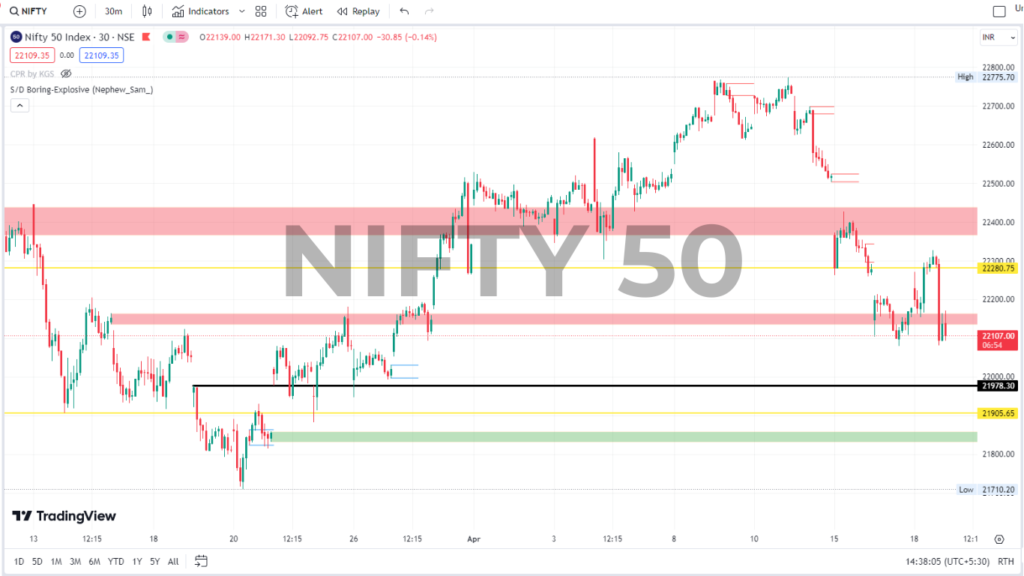
Nifty stands for National Stock Exchange Fifty. It’s a benchmark index created by the National Stock Exchange (NSE) of India in 1996. Nifty tracks the performance of the 50 largest companies listed on NSE, acting as a pulse for the Indian stock market.
Think of it as a snapshot of the Indian economy’s health, capturing the performance of key players across various sectors such as IT, financial services, consumer goods, and more.
Nifty serves as a meter for gauging the overall sentiment of the Indian stock market. When Nifty trends upward, it typically signifies optimism and confidence among investors, reflecting positive growth prospects. Conversely, a downward trend may signal caution or uncertainty in the market, prompting investors to reassess their strategies.
NSE and BSE: A Comparison
To comprehend Nifty fully, it’s essential to grasp the landscape in which it operates. There are two primary stock exchanges: the Bombay Stock Exchange (BSE) and the National Stock Exchange (NSE). Let’s explore their differences and similarities.
Bombay Stock Exchange (BSE):
Established in 1875, the BSE holds the distinction of being Asia’s oldest stock exchange. Based in Mumbai, it serves as a hub for trading a diverse array of securities, including stocks, bonds, and derivatives. What sets the BSE apart is its traditional trading system, blending open outcry and electronic platforms.
At the heart of BSE’s market dynamics lies the Sensex, its flagship index comprising the 30 largest and most actively traded stocks. As an investor, monitoring the Sensex offers insights into the performance of key players across various industries, guiding your investment decisions in the Indian market.
National Stock Exchange (NSE):
In contrast, the NSE represents a newer entrant into the Indian stock exchange arena, founded in 1992. Despite its relatively recent inception, the NSE has emerged as India’s largest exchange by trading volume, owing to its pioneering electronic trading system.
The Nifty 50, NSE’s flagship index, serves as a mirror reflecting the performance of the nation’s top 50 companies. It offers a comprehensive snapshot of the Indian economy’s health, encompassing a diverse range of sectors. As an investor, keeping tabs on the Nifty provides valuable insights into market trends, enabling you to make informed decisions about your investment portfolio.
Eligibility Criteria for Nifty Listing
The criteria companies must meet to earn a coveted spot on the Nifty 50 index.
Company Domicile and Listing:
First and foremost, to be eligible for inclusion in the Nifty 50 index, a company must be registered and listed on the National Stock Exchange (NSE) of India. This ensures that the company adheres to the regulatory framework set forth by the NSE, providing investors with transparency and confidence in its operations.
High Liquidity:
Liquidity plays a pivotal role in determining a company’s eligibility for Nifty listing. Shares of the company must exhibit high liquidity, meaning they can be readily bought and sold in the market without significantly impacting their price. This is assessed through metrics such as the average impact cost, which should be 0.50% or lower for the preceding six months on a portfolio of Rs. 10 crore.
Trading Frequency:
Furthermore, a company’s shares should have a high trading frequency, with trades occurring on all trading days over the previous six months. This ensures that the stock is actively traded, providing investors with ample opportunities to buy or sell shares as needed.
Market Capitalization:
Another crucial criterion for Nifty listing is market capitalization. The company’s average market capitalization, representing the total market value of its outstanding shares, should meet specific thresholds. This ensures that only companies of significant size and scale are included in the index, providing investors with exposure to industry leaders.
Derivative Trading:
Lastly, companies seeking Nifty listing must have shares eligible for trading in futures and options contracts on the NSE. This requirement enhances market efficiency and liquidity, allowing investors to hedge their positions and manage risk effectively.
Additional Points to Consider:
It’s important to note that Nifty 50 reconstitution occurs every six months, during which companies are evaluated based on their adherence to these eligibility criteria. Companies failing to meet the requirements may be removed from the index, while new companies meeting the criteria may be added. Additionally, shares with differential voting rights (DVR) may also be considered for inclusion in the Nifty 50 index, subject to meeting specified criteria.
Understanding these eligibility criteria sheds light on the rigorous selection process employed to ensure that the Nifty 50 index comprises the largest and most liquid companies in the Indian stock market. Stay tuned as we explore further aspects of Nifty and its impact on the investment landscape.
Top Players or Companies in Nifty 50
Nifty 50 boasts companies from diverse sectors, giving you a well-rounded view of the Indian economy. Here are some 10 examples of the top companies that form its backbone.
- Reliance Industries Limited (RIL):
- One of India’s largest conglomerates, RIL has a diversified presence across sectors such as petrochemicals, refining, telecommunications, and retail. With its robust business operations and expansive reach, RIL holds a prominent position in the Nifty 50 index.
- Tata Consultancy Services (TCS):
- As a global leader in IT services and consulting, TCS has established itself as a stalwart in the Nifty 50 index. With its innovative solutions and unwavering commitment to excellence, TCS continues to drive growth and value creation for its stakeholders.
- Infosys Limited:
- Another heavyweight in the IT services sector, Infosys is renowned for its cutting-edge technologies and client-centric approach. Its inclusion in the Nifty 50 index underscores its status as a key player shaping India’s digital landscape.
- Housing Development Finance Corporation Limited (HDFC):
- HDFC’s prominence in the Nifty 50 index stems from its leading position in the housing finance sector. With a legacy of trust and reliability, HDFC has emerged as a preferred choice for homebuyers and investors alike.
- ICICI Bank Limited:
- As one of India’s largest private sector banks, ICICI Bank commands a significant presence in the Nifty 50 index. With its comprehensive suite of banking and financial services, ICICI Bank caters to the diverse needs of its customers, driving growth and prosperity.
- State Bank of India (SBI):
- As the nation’s largest public sector bank, SBI holds a pivotal position in the Nifty 50 index. With its extensive branch network and diverse range of banking products, SBI continues to serve as a beacon of stability and trust in the Indian financial landscape.
- HDFC Bank Limited:
- Known for its relentless focus on customer service and technological innovation, HDFC Bank is a key constituent of the Nifty 50 index. With its robust business model and strong fundamentals, HDFC Bank continues to set benchmarks for excellence in the banking industry.
- Hindustan Unilever Limited (HUL):
- HUL’s inclusion in the Nifty 50 index reflects its stature as a leader in the fast-moving consumer goods (FMCG) sector. With its iconic brands and unwavering commitment to quality, HUL continues to delight consumers and create long-term value for its shareholders.
- Kotak Mahindra Bank Limited:
- As a prominent player in the private sector banking space, Kotak Mahindra Bank holds a significant position in the Nifty 50 index. With its customer-centric approach and innovative product offerings, Kotak Mahindra Bank remains at the forefront of India’s banking revolution.
- Larsen & Toubro Limited (L&T):
- L&T’s presence in the Nifty 50 index underscores its status as a powerhouse in the engineering and construction sector. With its diverse portfolio of projects and unwavering commitment to excellence, L&T continues to shape India’s infrastructure landscape.
Investing in Nifty
There are two main ways to invest in Nifty 50
Indirect Investment – Index Mutual Funds & ETFs:
Index Mutual Funds:
These funds passively track the performance of the Nifty 50 index, investing in the same proportion of stocks that make up the index. By investing in index mutual funds, investors gain exposure to a diversified portfolio of Nifty stocks, benefiting from the index’s overall performance. This approach is particularly suitable for those seeking a hands-off investment strategy with lower fees compared to actively managed funds.
Exchange-Traded Funds (ETFs):
Similar to index funds, ETFs track the Nifty 50 index but trade on stock exchanges like individual stocks. ETFs offer the flexibility of buying and selling units throughout the trading day, making them ideal for investors looking for liquidity and convenience. With lower expense ratios compared to index funds, ETFs present a cost-effective way to invest in Nifty 50 stocks.
Direct Investment – Buying Individual Stocks:
- For investors seeking more control and flexibility, direct investment in individual stocks comprising the Nifty 50 index is an option. By purchasing shares of top-performing companies in the Nifty 50 index, investors can tailor their portfolios to their specific preferences and investment objectives. However, this approach requires diligent research and monitoring to make informed investment decisions, as well as the ability to manage and rebalance a diversified portfolio of stocks.
Additional Factors to Consider Before Investing
- Investment Goals and Risk Tolerance
- Investment Horizon
- Investment Amount
- Factors Influencing Nifty’s Movement
Market Participants:
Supply and Demand:
The fundamental principle of supply and demand plays a pivotal role in determining Nifty’s movement. When there’s heightened demand for shares of Nifty constituents, driven by factors such as positive earnings reports or optimistic economic outlook, it can drive up the index’s value. Conversely, an oversupply of shares or negative market sentiment can exert downward pressure on Nifty.
Economic Factors:
- Interest Rates: Fluctuations in interest rates can impact investor sentiment and influence Nifty’s performance. Higher interest rates may make equities less attractive relative to fixed-income securities, leading to a decrease in demand for Nifty constituents and vice versa.
- Inflation: The rate of inflation affects purchasing power and consumer sentiment, thereby influencing corporate earnings and investor confidence. High inflation can erode real returns on investments, dampening demand for equities and exerting downward pressure on Nifty.
- Economic Growth: Nifty’s movement is closely linked to the overall economic growth trajectory of the country. A robust and expanding economy typically translates to higher corporate earnings and increased investor optimism, buoying Nifty’s performance. Conversely, economic slowdowns or contractions may lead to subdued market sentiment and downward pressure on Nifty.
Company Performance:
- Earnings: The financial performance of Nifty constituents, particularly their earnings reports, plays a significant role in driving Nifty’s movements. Positive earnings surprises or strong quarterly results can bolster investor confidence and propel Nifty upward, while disappointing earnings can trigger sell-offs and contribute to Nifty’s decline.
Global Events:
- Geopolitical Events: Developments on the global stage, such as geopolitical tensions, trade disputes, or geopolitical unrest, can impact investor sentiment and influence Nifty’s movement. Uncertainty or instability in global markets may lead to risk aversion among investors, prompting them to reallocate their investments and affecting Nifty’s performance.
- Global Economic Conditions: Nifty’s performance is also influenced by global economic trends and conditions. A synchronized global economic recovery or downturn can have ripple effects on the Indian stock market, impacting investor sentiment and Nifty’s trajectory.
Other Factors:
- Government Policies: Policy decisions, regulatory changes, or fiscal measures implemented by the government can have far-reaching implications for Nifty’s performance. Favorable policies conducive to economic growth and business expansion may drive Nifty upward, while adverse policy developments can dampen market sentiment and weigh on Nifty.
- Investor Sentiment: Market sentiment, shaped by news headlines, economic data releases, and investor perception, can have a significant impact on Nifty’s movement. Positive sentiment may lead to buying interest and drive Nifty upward, while negative sentiment can trigger selling pressure and contribute to Nifty’s decline.
Conclusion
Nifty serves as a cornerstone of the Indian financial market, encapsulating the performance of the nation’s top 50 companies listed on the National Stock Exchange (NSE). From its composition and eligibility criteria to its impact on the broader market landscape, Nifty offers invaluable insights for investors seeking to navigate the dynamic world of Indian equities.
As young professionals to middle-aged individuals with an interest in intraday trading and investment, understanding Nifty’s significance and intricacies empowers you to make informed investment decisions and capitalize on market opportunities. Whether through indirect investment avenues like index mutual funds and ETFs or direct investment in individual stocks, Nifty provides a gateway to diversified and potentially rewarding investment opportunities in the Indian stock market.
Furthermore, by delving into the factors influencing Nifty’s movement, investors gain a deeper appreciation for the complexities of the market and the various drivers shaping Nifty’s trajectory. From economic indicators and corporate performance to global events and investor sentiment, these factors collectively influence Nifty’s movements and present both challenges and opportunities for investors.
By understanding its composition, how it’s affected by various factors, and the different ways to invest in it, you’ll be well on your way to making informed investment decisions. Remember, this is just the beginning. Always do your own research, consider your risk tolerance and investment goals, and consult a financial advisor before making any investment decisions.
FAQs (Frequently Asked Questions) about Nifty:
- What is Nifty and why is it important?
- Nifty, short for the National Stock Exchange Fifty, is a stock market index comprising the 50 largest and most liquid companies listed on the National Stock Exchange (NSE) of India. It is important because it serves as a benchmark for the Indian stock market, reflecting the overall performance and sentiment of the economy.
- How is Nifty different from Sensex?
- Nifty and Sensex are both stock market indices in India, but they differ in terms of composition and calculation methodology. Nifty comprises 50 companies listed on the NSE, while Sensex includes 30 companies listed on the Bombay Stock Exchange (BSE). Additionally, Nifty is calculated using the free-float market capitalization method, whereas Sensex is calculated using the market capitalization method.
- How are companies selected for inclusion in the Nifty 50 index?
- Companies are selected for inclusion in the Nifty 50 index based on certain eligibility criteria set by the National Stock Exchange (NSE). These criteria include factors such as market capitalization, liquidity, trading frequency, and eligibility for derivative trading. Companies that meet these criteria are considered for inclusion in the index.
- Can individual investors invest directly in the Nifty 50 index?
- Yes, individual investors can invest directly in the Nifty 50 index by purchasing shares of the companies that comprise the index. Alternatively, investors can invest indirectly in the Nifty 50 index through index mutual funds or exchange-traded funds (ETFs) that track the performance of the index.
- How often is the Nifty 50 index rebalanced?
- The Nifty 50 index is rebalanced semi-annually, meaning that the composition of the index is reviewed and adjusted every six months. During the rebalancing process, companies may be added or removed from the index based on their performance and adherence to the eligibility criteria set by the NSE.
- What factors influence the movement of the Nifty 50 index?
- The movement of the Nifty 50 index is influenced by a variety of factors, including economic indicators, corporate earnings, global events, investor sentiment, and government policies. Changes in interest rates, inflation, GDP growth, geopolitical tensions, and regulatory changes can all impact the performance of the index.